A New App for Parkinson’s Disease
The creation of this new Parkinson’s App was a collaborative experience between me and one of my peers. Our class project was about implementing proper search functions and accessibility. After numerous brainstorming sessions, we landed on the topic of Parkinson’s Disease and we noticed there was a shockingly low amount of available resources for affected individuals at home.
At first, we did not know how we would be able to contribute and help those affected by Parkinson’s Disease. So our first step was to conduct a competitive analysis and investigate our direct and indirect competition. We looked at a few different companies and their products, but one really stood out to me. There was this company that created devices that helped people with speech and language impairments improve their communication, speech, and quality of life.
This sounded like an awesome resource for PD, but as I investigated this company more, I started to see some glaring problems. This was a great product for those who could afford it. Only well off families or those with specific insurance providers/plans had the means to obtain this special device. I presented my findings to my partner and we both instantly knew what needed to be done. Our new goal was to create an affordable and accessible app that those with middle-stage Parkinson’s can use in their daily lives.
Before we made any design decisions, we needed to understand exactly who our users are. We created two journey maps for two different users. The first journey map was about a user that wanted to be able to find assistive technology for Parkinson’s to help a family member. They needed an affordable option that would work from within the comfort of their home. The second journey we went through was for a user with Parkinson’s that wanted to be able to set up a device to help them communicate with those around them, because it was getting harder to speak. Here’s an example of one of the journey maps we created for the project.
From this understanding, we designed the main features of our app and how it could help those with PD.
This is the “Cards” Section of our App. This is where the individuals can communicate with their caretakers or family members (Figure 1).
The main page here is a few preset cards that express basic needs such as feeling hungry or thirsty. The user who sets up the app can also search for other made cards or create their own if they have a specific need that our app might not address.
When they are ready to use this section, they can tap the “Lock Screen” button that way the person afflicted with Parkinson’s does not accidently hit anything else or swipe out of the app.
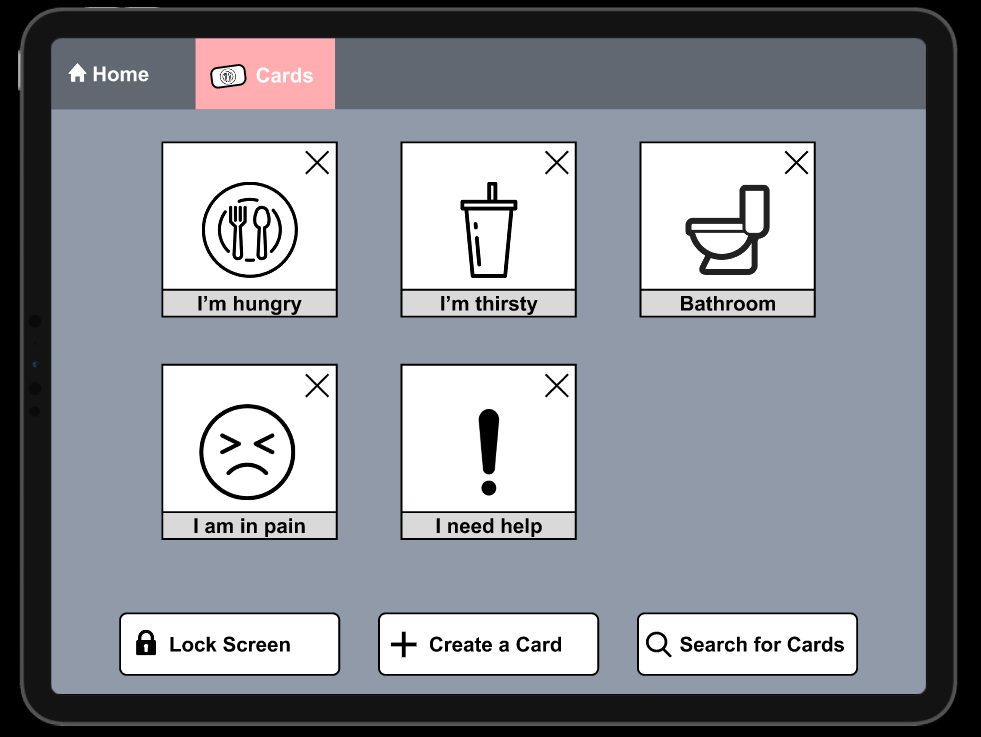
Figure 1: Cards Section
Figure 2 is the “Exercises” Section of the App. This is where users can get practice for writing and typing for example.
As the project has a focus on searchability, we included a search box that has auto-complete for exercises. In addition to the dynamic search box, two relevant exercises will pop up below the search bar that users can click on.
This is one of the ways we can try to help those with Parkinson’s Disease. These exercises can help them get used to the app and are designed to improve fine motor control.
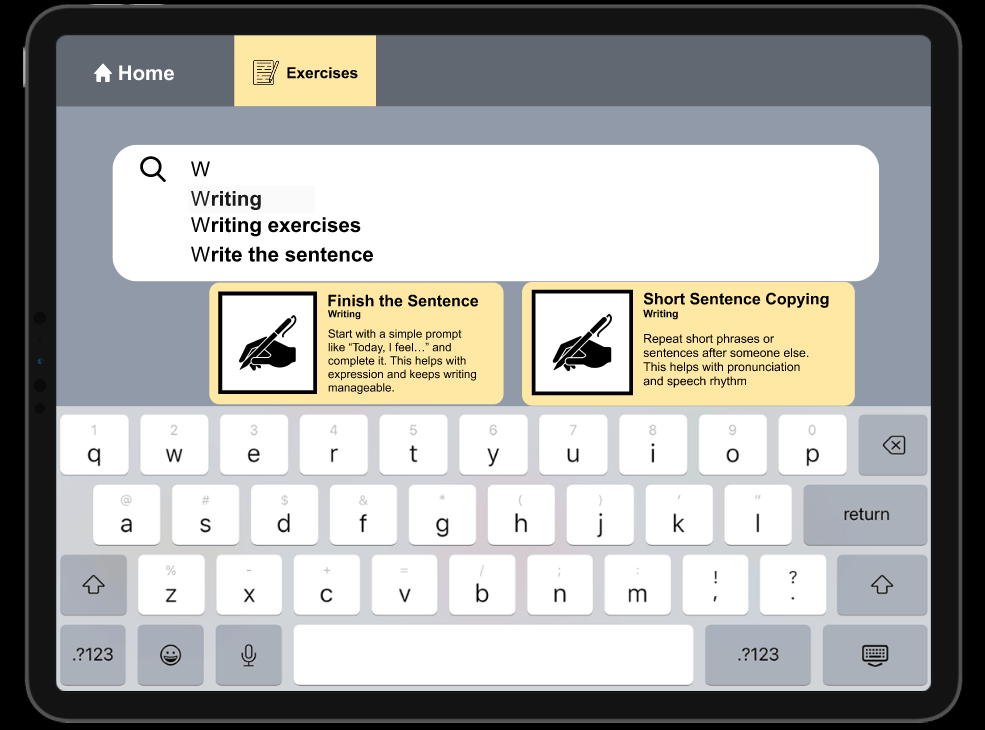
Figure 2: Writing Exercises
Figure 3 is the “Drawing” Section of the App. This is where users can practice their drawing skills.
This section was to add an extra feature for the users to express their creativity. It can be used for communication or just to have some fun and reduce stress.
Other benefits include enhancing fine motor skills and managing symptoms like tremors and freezing.
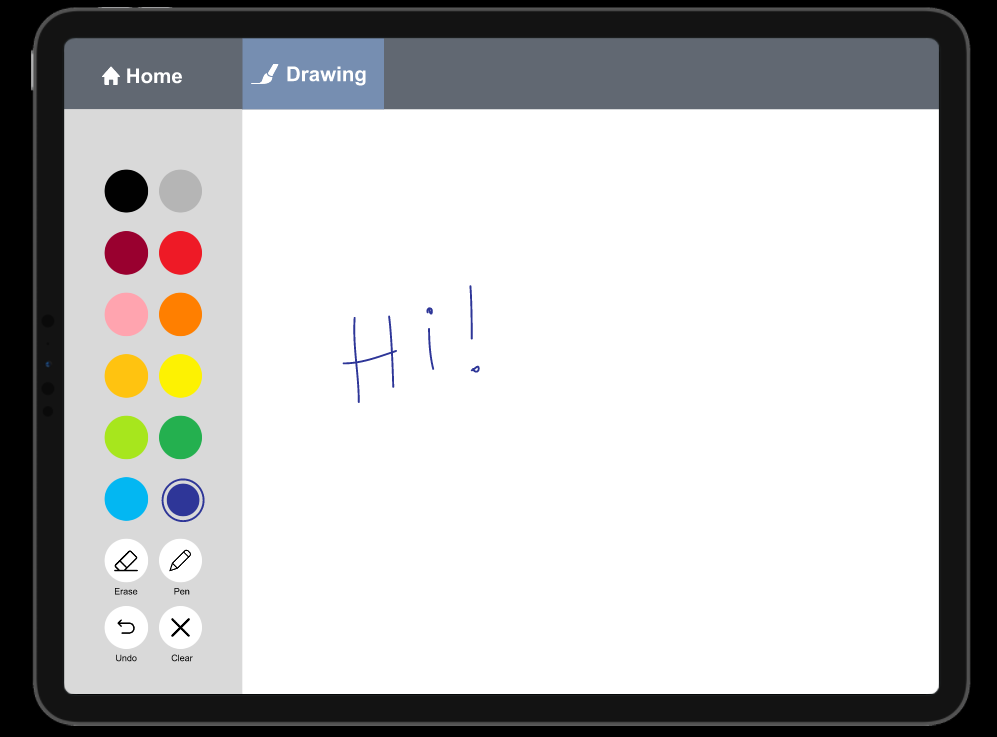
Figure 3: Drawing
We also had a fourth section for text-to-speech. This area was included because it is not always easy for those with Parkinson’s to be able to project their voice and be heard. Each section had a designated purpose to help make their lives better from the comfort of home.
One of the biggest challenges with this project was trying to make this app as user friendly and accessible as possible, as anyone with Parkinson’s at any stage and at any progression of the disease could be using this app. A caretaker or family member could also be using this app to set it up for a loved one or patient, meaning we were dealing with a wide range of tech literacy. Even with the obstacles we faced, we believe we were able to provide a blueprint for a solution to an affordable and accessible app for those with Parkinson’s Disease that want to stay within the comfort of their home.